
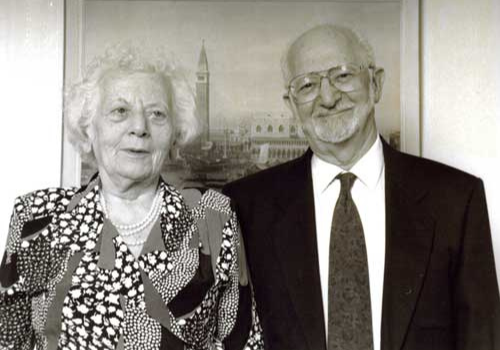
The shortlist has been announced for the Marie and Jack Shapiro Prize, which is awarded by the British Tinnitus Association (BTA) to the published research paper by a UK-based author most likely to result in improved treatment or public awareness of tinnitus.
The Marie and Jack Shapiro Prize is intended to encourage researchers, public communicators and others to develop an interest in tinnitus and to recognise their efforts. The prize is named after the late Jack Shapiro, the founder of the BTA, and his wife Marie, who both played an important role in the establishment of the charity and in raising awareness of tinnitus.
The prize is judged by the BTA’s Professional Adviser’s Committee – a panel of medical professionals and researchers with a special interest in tinnitus – with the winner due to be announced in October 2021.
The shortlist for 2021 is:
- Aazh H, Swanepoel W, Moore BCJ. Telehealth tinnitus therapy during the COVID-19 outbreak in the UK: uptake and related factors.
- Beukes EW, Manchaiah V, Allen PM, Andersson G, Baguley DM. Exploring tinnitus heterogeneity.
- Dawes P, Cruickshanks KJ, Marsden A, Moore DR, Munro KJ. Relationship Between Diet, Tinnitus, and Hearing Difficulties.
- Dawes P, Newall J, Stockdale D, Baguley DM. Natural history of tinnitus in adults: a cross-sectional and longitudinal analysis.
- Greenwell K, Sereda M, Coulson NS, Geraghty AWA, Bradbury K, Hoare DJ. ‘That’s just how I am’: a qualitative interview study to identify factors influencing engagement with a digital intervention for tinnitus self-management.
- Hockley A, Berger JI, Palmer AR, Wallace MN. Nitric oxide increases gain in the ventral cochlear nucleus of guinea pigs with tinnitus.
- Munir S, Pryce H. How can sound generating devices support coping with tinnitus?
- Sereda M, McFerran D, Axon E, Baguley DM, Hall DA, Potgieter I, Cima R, Cox S, Hoare DJ. A process for prioritising systematic reviews in tinnitus.
- Smith H, Fackrell K, Kennedy V, Barry JG, Broomhead E, Hoare DJ. An evaluation of paediatric tinnitus services in UK National Health Service audiology departments.
- Smith SS, Kitterick PT, Scutt P, Baguley DM, Pierzycki RH. An exploration of psychological symptom-based phenotyping of adult cochlear implant users with and without tinnitus using a machine learning approach.
- Taylor JA, Thompson DM, Hall DA, Walker DM, McMurran M, Casey A, Featherstone D, MacDonald C, Stockdale D, Hoare DJ. The TinMan study: feasibility trial of a psychologically informed, audiologist-delivered, manualised intervention for tinnitus.
<p>We are delighted to see that vital tinnitus research has continued in these unprecedented times and a very difficult situation for researchers and clinicians. Despite a lack of funding and resource, the quality and relevance of research continues to grow year-on-year and choosing the winner of this year’s Marie and Jack Shapiro Prize will be a very difficult decision.</p> <p>Whilst the Shapiro Prize recognises the fantastic work that is already being done in tinnitus research, much more is needed before we can realise our vision of a world where no one suffers from tinnitus. We are committed to funding, supporting and campaigning for tinnitus research now and in the future.</p>